WHAt IS Moon2030 ?
Moon2030 is an educational project launched in September 2025 by scientists from the University of Lorraine, in collaboration with local schools in the Nancy area, with the goal of involving students in discussions about the future of lunar space exploration. This year, the program includes seven classes, from 4th to 8th grade, located in Champigneulles, Dombasle, Toul, Bouxières-aux-Dames, and Sarralbe.
In elementary school, students were tasked with building a model of a future lunar base. In middle school, activities vary depending on the teachers involved and include carbon footprint calculations, plant biology experiments under simulated lunar conditions, and a creative writing competition.
Moon2030 is funded by CNES (the French Space Agency), the PEPR Origins, the IMPACT EPHemeris project of the Lorraine Initiative of Excellence (a France 2030 program), and supported by the Épinal Planetarium, the La main à la pâte Foundation and France-Bleu Sud Lorraine.
THE SPECIAL EVENT OF JUNE 24th, 2026
Nancy will host an international conference dedicated to the Moon in June 2026: the European Lunar Symposium, to be held from June 21 to 26, 2026, at the Muséum-Aquarium. The event will bring together leading experts in the field, covering topics ranging from lunar geology to human space exploration.
On this occasion, a day dedicated to science outreach will be organized at Nancy City Hall. The program will include space mission and meteorite exhibitions, an inflatable planetarium (with animations from the Epinal Planetarium and Sirius association), rover demonstrations, a lunar jeep simulator, solar observations with a telescope (organized by the Lorraine Astronomical Society), and a public lecture.
The event will also feature the final presentations of the projects carried out by school students as part of the Moon2030 program. Admission will be free and open to everyone.
WHY the MOON ?
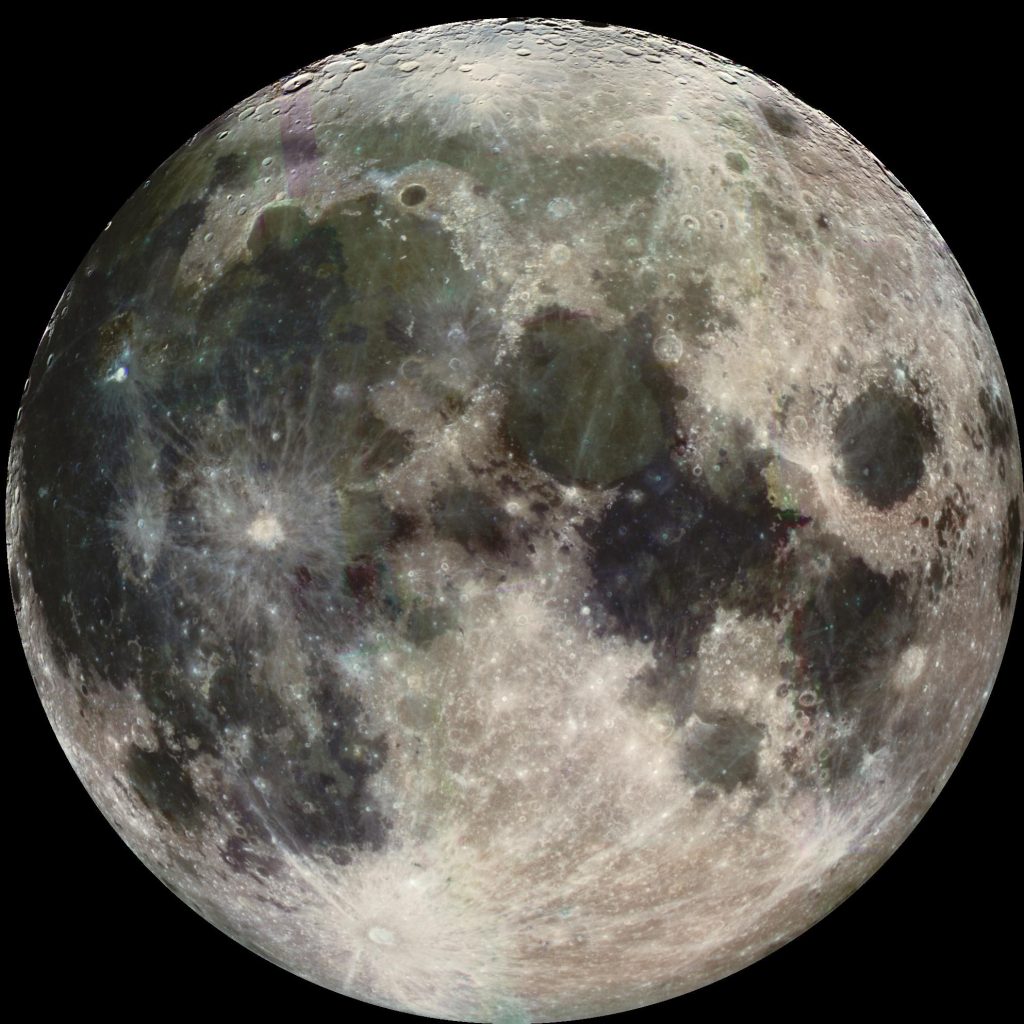
Over the past few years, the Moon has once again become a major destination for space exploration. After several decades of relative indifference, major space agencies—such as NASA and the China National Space Administration (CNSA)—along with new private players, are multiplying plans for lunar missions. Whether it involves returning humans to the lunar surface, building inhabited bases, or exploiting lunar resources, the Moon is now seen as a strategic stepping stone for humanity’s future in space.
This renewed interest can be explained by several factors: technological advances, international competition, scientific knowledge, the ambition to prepare future missions to Mars, and the potential use of lunar resources. As a result, dozens of missions are planned in the coming years, at a pace not seen since the Moon race of the 1960s. However, this new enthusiasm also raises fundamental questions. Although it may appear inert, our natural satellite remains a fragile environment with immense scientific, cultural, and symbolic value. At a time when space is becoming a new arena for human activity, it is essential to set clear limits and adopt responsible practices. These ideas lie at the heart of the Moon2030 project, which encourages students to rethink the space exploration of tomorrow and to refocus priorities around science.
participants FOR 2025
Participants – 2025
The scientists involved in the Moon2030 project come from a wide range of disciplines, including geology, planetary science, biology, space medicine, and psychology. They are affiliated with several research laboratories in the Lorraine region:
Centre de Recherches Pétrographiques et Géochimiques (CRPG), Nancy
Stress, IMmunity and PAthogens Laboratory (SIMPA), Nancy
Lorraine Laboratory of Psychology and Neuroscience of Behavioral Dynamics (2LPN), Metz
In addition, the project includes a science writer and outreach specialist, Nicolas Beck, as well as the Director of the Épinal Planetarium, Didier Matthieu, who provides a range of educational resources, particularly for the final presentation day. The Lorraine Astronomical Society is also involved as a partner and contributes to activities in several classes.
Participating Schools (2025–2026)
Buffon Elementary School, Champigneulles
4th and 5th grade classes
Coordinators: Jessica Flahaut and Jean PaulyBouxières-aux-Dames Elementary School
5th grade class
Coordinator: Nicolas BeckJB Vatelot Elementary School, Toul
5th grade class
Coordinator: Anne-Lyse BabinJ. Farenc Middle School, Dombasle
6th and 8th grade classes
Coordinator: Hélène Pastel-GenyR. Doisneau Middle School, Sarralbe
8th grade class
Coordinators: Nicolas Beck and Jean Pauly
CONTACT
For more information, please contact the project coordinator, Jessica Flahaut.