Recent publications
Barnes J. J., Nguyen A. N., Abernethy F. A. J., et al. (2025) The variety and origin of materials accreted by Bennu’s parent asteroid. Nature Astronomy 9, 1785–1802. https://doi.org/10.1038/s41550-025-02631-6
Barry P., De Moor J., Broadley M., Seltzer A., Bekaert D., Patil K., Bartels C., Young E., Longworth B., Barosa B., Bastianoni A., Bastoni D., Cascone M., Turner S., Tyne R., Anderson M., Li K., Curtice J., Kumar N., Jessen G., Blamey J., Ramírez C., Chiodi A., Aguilera F., Layana S., González C., Aguilera M., Alvarez G. M., Marty B., Lloyd K., and Giovannelli D. (2025) Carbon, nitrogen, and noble gas isotopes reveal deep volatile signatures in thermal springs in the Central Volcanic Zone (CVZ) of the Andes. Earth and Planetary Science Letters 651, 119169. https://doi.org/10.1016/j.epsl.2024.119169
Bekaert D. V., Auro M., Righter K., Peterson L. D., Heard A. W., Davis D., Füri E., Marrocchi Y., Irving A. J., Prissel K., Burton K., Fitoussi C., and Nielsen S. G. (2025) Vanadium isotope fractionation during early planetary evolution: insights from achondrite analyses. Earth and Planetary Science Letters 652, 119202. https://doi.org/10.1016/j.epsl.2025.119202
Bekaert D. V., Avice G., and Marty B. (2025) Fluid inclusions: tiny windows into global paleo-environments. Communications Earth & Environment 6, 820. https://doi.org/10.1038/s43247-025-02799-9
Bouvier A., Bermingham K. R., and Füri E. (2025) Planetary materials: A record of early Solar System events to planetary processes. In: Weis D. and Anbar A. (eds.), Treatise on Geochemistry, 3rd ed., Vol. 7, 203–256. Elsevier. https://doi.org/10.1016/B978-0-323-99762-1.00137-6
Broadley M. W., Barry P. H., Tyne R. L., Bekaert D. V., Karolytė R., Hudak M. R., McPaul K., Ramirez C. J., Curtice J., Lloyd K. G., Ballentine C. J., Marty B., Young E. D., and Seltzer A. M. (2025) Noble gas isotopes and nitrogen isotopologues reveal deep sources and subsurface fractionation in Yellowstone gases. ACS Earth and Space Chemistry 9, 1310–1321. https://doi.org/10.1021/acsearthspacechem.4c00349
Broadley M. W. and Bekaert D. V. (2025) Noble gas mass spectrometry. In: Treatise on Geochemistry, 3rd ed., Vol. 8, pp. 671–690. Elsevier. https://doi.org/10.1016/B978-0-323-99762-1.00097-8
Cardoso C. D., Pik R., Caracausi A., Halldórsson S. A., Stefánsson A., Zimmermann L., Paris G., Ricci A., and Hjartarson H. (2025) Helium isotopes in geothermal fluids reveal off-rift plume degassing and localized seismicity-induced processes in North Iceland. Geochimica et Cosmochimica Acta 395, 12–31. https://doi.org/10.1016/j.gca.2025.03.004
Crowther S. A., Cowpe J. S., Fawcett L., et al. (2026) An I–Xe age 8 Myr after solar system formation in a Hayabusa2 sample records alteration on the parent planetesimal of asteroid Ryugu. Geochimica et Cosmochimica Acta413, 218–232. https://doi.org/10.1016/j.gca.2025.12.008
Fénisse G., Bekaert D. V., Blard P. H., Duprat J., Mattia I., Genge M., and Suttle M. D. (2025) The extraterrestrial dust accretion rate on Earth at Dome C, Antarctica: A fresh look with ³He. Earth and Planetary Science Letters 663, 119396. https://doi.org/10.1016/j.epsl.2025.119396
Fontaine F. R., Komorowski J.-C., Corbeau J., et al. (2025) Ongoing multiparameter unrest at the Montagne Pelée volcano on Martinique from 2019 to 2024. Scientific Reports 15, 23189. https://doi.org/10.1038/s41598-025-05641-6
Halford D. T., Karolytė R., Barry P. H., Tyne R. L., Hillegonds D. J., Adeniyi E. O., Bekaert D. V., Broadley M. W., Hudak M. R., Lloyd K. G., Marty B., Ramírez C. J., Seltzer A. M., and Ballentine C. J. (2025) Examining the effect of heat from the Yellowstone plume on the release of helium from the crust. Geochimica et Cosmochimica Acta404, 72–85. https://doi.org/10.1016/j.gca.2025.06.015
Lastes A., Bekaert D. V., Tibari B., Seltzer A. M., Broadley M. W., Barry P. H., and Marty B. (2025) Characterization of the HIMU mantle source from noble gas isotopes in volcanic gas emissions in São Tomé (Cameroon Volcanic Line). ACS Earth and Space Chemistry. https://doi.org/10.1021/acsearthspacechem.5c00056
Li K., Hudak M. R., Broadley M. W., Anderson M. K., Bekaert D. V., Krantz J. A., et al. (2025) Hybrid mantle plumes with recycled and primordial nitrogen: Insights from plume-influenced basaltic glasses from Reykjanes Ridge and Rochambeau Bank. Earth and Planetary Science Letters 667, 119538. https://doi.org/10.1016/j.epsl.2025.119538
Libourel G., Humbert F., Marty B., Gayer E., and Roskosz M. (2025) Effects of melt composition and gas speciation on nitrogen solubility in basaltic melt. ACS Earth and Space Chemistry 9, 2245–2259. https://doi.org/10.1021/acsearthspacechem.5c00074
Marty B., Contamine D., Bekaert D. V., Lastes A., Pik R., Labidi J., Young E. D., Broadley M. W., Barry P. H., Byrne D. J., and Seltzer A. M. (2025) Uncovering the xenon isotope composition of continental rift magmas: Insight from analysis of geothermal gases at Homa Hills, Kenya. Earth and Planetary Science Letters 653, 119224. https://doi.org/10.1016/j.epsl.2025.119224
Marty B. and Genda H. (2025) Geochemical and dynamical views on the origin of Earth’s atmosphere and oceans. In: Weis D. and Anbar A. (eds.), Treatise on Geochemistry, 3rd ed., Vol. 7, 383–416. Elsevier. https://doi.org/10.1016/B978-0-323-99762-1.00106-6
Marty B., Zimmermann L., Füri E., Bekaert D. V., Barnes J. J., Nguyen A. N., Connolly H. C., and Lauretta D. S. (2025) Noble gases and nitrogen in material from asteroid Bennu. Meteoritics & Planetary Science. https://doi.org/10.1111/maps.70058
Milesi G., Cardoso C. D., Pik R., Moreira M., Charpentier D., and Mercadier J. (2025) Origin of helium and associated fluid in fault-related hydrothermal systems of the Eastern Pyrenees. Terra Nova 37, 93–102. https://doi.org/10.1111/ter.12753
Patzek M., Kadlag Y., Rüfenacht M., Füri E., Pack A., Bischoff A., Becker H., Visser R., John T., and Schönbächler M. (2025) Multi-isotope (N, O, Ti, Cr) study of C1 and CM-like clasts – probing unsampled C1 material. Meteoritics & Planetary Science 60, 1073–1094. https://doi.org/10.1111/maps.14343
Seltzer A. M., Tyne R. L., Musan I., Langman J. B., Amaya D. J., Karnauskas K. B., et al. (2025) Past aquifer responses to climate recorded by fossil groundwater. Science Advances 11, eadu7812. https://doi.org/10.1126/sciadv.adu7812
Tyne R. L., Broadley M. W., Bekaert D. V., Barry P. H., Warr O., Langman J. B., et al. (2025) Passive degassing of lithospheric volatiles recorded in shallow young groundwater. Nature Geoscience, 1–6. https://doi.org/10.1038/s41561-025-01702-7
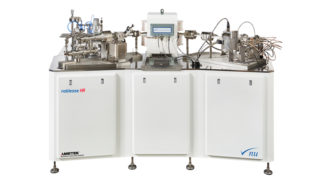
Zimmermann L., Füri E., Boulliung J., and Saxton J. M. (2025) Performance of the 3F4M Noblesse–HR noble gas mass spectrometer for multicollection Ne–Ar–N₂ analyses. Geochemistry, Geophysics, Geosystems 26, e2025GC012247. https://doi.org/10.1029/2025GC012247
Zhang X., Su F., Avice G., Bekaert D. V., Obase T., Otsuki Y., et al. (2025) He, Ne, and Ar isotope systematics in Chang’e-5 plagioclase reveal diffusive loss and reirradiation processes. Earth and Planetary Science Letters 671, 119666. https://doi.org/10.1016/j.epsl.2025.119666
Notable publications
Marty, B., L. Zimmermann, P.G. Burnard, R. Wieler, V.S. Heber, D.L. Burnett, R.C. Wiens, P. Bochsler (2010). Nitrogen isotopes in the recent solar wind from the analysis of Genesis targets: Evidence for large-scale isotope heterogeneity in the early solar system. Geochim. Cosmochim. Acta 74, 340–355. https://doi.org/10.1016/j.gca.2009.09.007
Blard, P.-H., G. Balco, P.G. Burnard, K.A., Farley, C.R. Fenton, R. Friedrich, A.J.T. Jull, S. Niedermann, R. Pik, J.M. Schaefer, E.M. Scott, D.L. Shuster, F.M. Stuart, M. Stute, G. Winckler, L. Zimmermann (2015). An inter-laboratory comparison of cosmogenic 3He and radiogenic 4He in the CRONIS-P pyroxene standard. Quaternary Geochronology, 26, 11–19. https://doi.org/10.1016/j.quageo.2014.08.004
Tibari, B., A. Vacherat, M. Stab, R. Pik, D. Yeghicheyan, P. Hild (2016). An alternative protocol for single zircon dissolution with application to (U-Th-Sm)/He thermochronology. Geostandards and Geoanalytical Research, 40, 365–375. https://doi.org/10.1111/j.1751-908X.2016.00375.x
Füri, E., E. Deloule, R. Trappitsch (2017). The production rate of cosmogenic deuterium at the Moon’s surface. Earth and Planetary Science Letters, 474, 76–82. https://doi.org/10.1016/j.epsl.2017.05.042
Almayrac, M.G., D.V. Bekaert, M.W. Broadley, D.J. Byrne, L. Piani, B. Marty (2022). The EXCITING experiment exploring the behavior of nitrogen and noble gases in insterstellar ice analogs. The Planetary Science Journal, 3, 252. https://doi.org/10.3847/PSJ/ac98b0